Top Signs You Need Garage Door Service – Don’t Ignore These
The signs that actually predict a garage door failure are mechanical and measurable, not vague. If your door opens slower on cold mornings, if you hear a metallic snap, or if the door won’t hold itself at mid-height, the system is telling you something specific. Homeowners ignore these signals all the time because the door still moves. That’s exactly how a fraying cable or a fatigued spring turns a scheduled repair into a Sunday emergency.
If you’d rather not climb a ladder in the cold to figure it out yourself, call (844) 789-3469 and we’ll take a look.
What does it mean when your garage door opens slower in cold weather?
It means one of two things is happening: the lubricant on the tracks, rollers, and hinges has thickened and lost its glide, or the spring has fatigued to the point where your opener motor is working harder than it was designed to. In Wheaton, January cold makes both worse. The door that “just feels stiff” in November is often the door that won’t budge by February.
A door that used to open in eight seconds and now takes fifteen is compensating. Your opener motor has a force setting, and it’s been quietly pushing past its normal limit to lift a door the spring is no longer helping with. Eventually the motor either trips its safety reverse or the gear inside strips from the extra strain. When we diagnose a slow door, we check spring tension and opener force together – not just one or the other – because the symptom looks the same from the driver’s seat but the fix is completely different.
If you’ve noticed the slowdown, don’t wait for the strip. That’s the moment to schedule a diagnostic, not the moment to ignore it.
What do the different garage door noises actually mean?
Noise is diagnostic. The type of sound tells you which component is failing, and each one has a different urgency. Here’s how we read them:
- Grinding or a growling sound from the opener head: the plastic drive gear inside the opener is wearing down. Common on older Chamberlain and Genie units. The opener still works, but the gear is stripping and will eventually shear completely.
- A sharp metallic snap, followed by the door not lifting: a torsion spring has broken. This is the loudest and most urgent sound in the trade. Stop operating the door. The spring is under extreme tension and the door is now being held only by the opener and cables – the wrong hands on this can end badly.
- Scraping or a rhythmic rubbing as the door travels: the cable is riding off the drum or rubbing against the track. This one is easy to miss because it’s quiet, and it’s the one that precedes a cable snap.
- A single pop or bang from one side: an extension spring has broken. Extension springs are the older style, mounted above the tracks, and they fail with a bang you’ll remember.
A little creaking is normal wear. A grinding or snapping is not. If you can name the sound, you can usually name the repair – and skipping that step is how a $100 bearing becomes a full opener replacement.
What is the balance test, and why is it the best thing a homeowner can check?
The balance test tells you whether your springs are still doing their job, and it takes about two minutes. Pull the emergency release cord (usually a red handle) to disconnect the opener from the door, then lift the door by hand to about waist height and let go. A properly balanced door stays put at mid-height without drifting. A door that falls fast, slams down, or shoots up on its own has a spring or tension problem.
This is the single most useful self-check because it isolates the door from the opener. When the door is disconnected, the opener can’t hide the problem by forcing it through. If the door won’t hold itself, the springs are out of balance even if the opener still lifts it. That’s the situation that quietly destroys opener gears and burns out motors – the door is being lifted entirely by a machine that was never meant to carry the full weight.
Reconnect the opener afterward by running it until the carriage re-engages, or check your opener manual for the reconnect procedure. If the door fails the balance test, it’s a spring issue, and that’s the one repair category worth handing off. Torsion springs and their cables are under enough tension to cause serious injury if a DIY attempt goes wrong. Trained hands do this safely; untrained ones don’t.
Which visual wear signs are homeowners most likely to miss?
The physical clues are usually right in front of you. These are the ones we see overlooked most often in Wheaton homes:
- Rust streaking on the cables. Cables are steel under constant tension. Rust means moisture has reached the core, and a rusted cable is weaker than its rating. Streaking rust lines along a cable are a replacement signal, not a cosmetic one.
- Uneven compression on the bottom seal. Look at the rubber seal against the floor from inside. If one side is flattened and the other side is barely touching, the door is out of level, which points to a spring or cable imbalance.
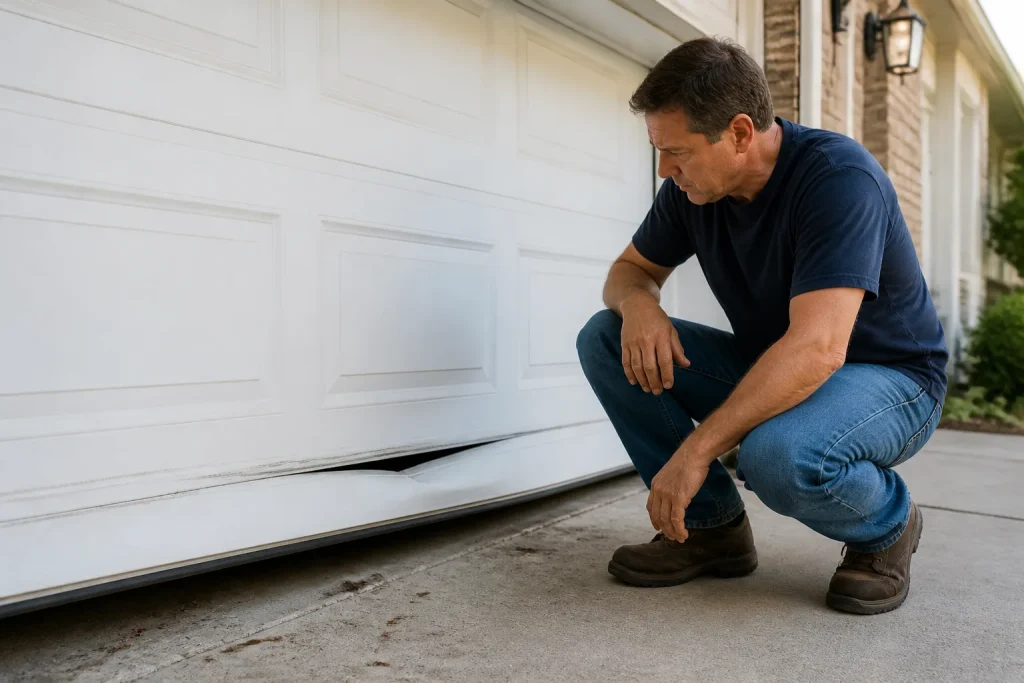
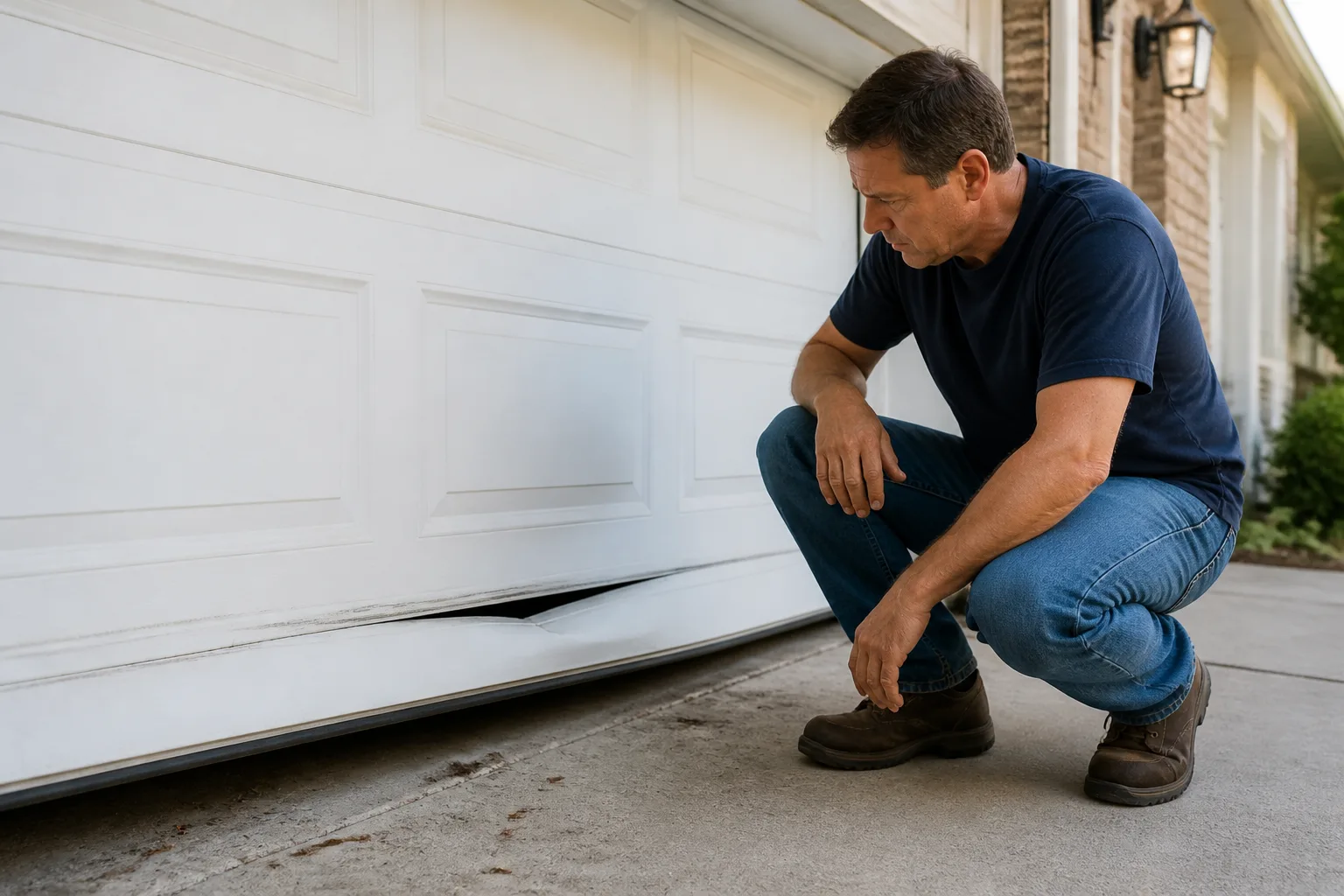
- Daylight visible along the vertical track seal. A thin stripe of light between the door edge and the vertical track means the door has shifted on its hinges or the track has bent. Small gaps get bigger, and a misaligned door rubs its way through rollers fast.
- Loose hinges and worn rollers. Gripping each hinge between two fingers and giving a wiggle is enough. A hinge that moves freely in its mount is wearing through the door panel, which is a much more expensive fix than replacing the hinge.
Any one of these is worth a look. Two or three together, and the door is past due for service.
Why does my garage door reverse unexpectedly, and is it always the sensors?
No. The sensors are the first thing to check, but they’re not the only cause. A door that reverses mid-travel, or reverses on the way down even with nothing in the way, is often telling you the opener’s safety mechanism is detecting resistance it doesn’t like. And the reason it’s detecting resistance is frequently a spring imbalance. The opener is programmed to reverse when it feels force above a threshold, and a door with a fatigued spring is forcing the opener into that threshold on every cycle.
Alignment matters too. Dirty or misaligned photo-eye sensors cause the most common failure – the door comes down a foot and goes right back up. Wiping the lenses and checking that both sensors are aimed at each other with a steady indicator light resolves most of those. If the lights are solid and the door still reverses, the issue has moved past the sensors and into the mechanical side, and that’s when we want to see it.
Ruling out sensors first takes five minutes and saves a service call. If the symptom survives the sensor check, we can handle the garage door opener repair and the underlying balance issue together. A LiftMaster or Chamberlain unit is good at telling you something is wrong with its reversing behavior. Our job is translating that signal correctly instead of swapping out a perfectly fine opener.
Why do fall warning signs matter more in Wheaton?
Because fall is when the small signals show up, and cold is when they turn into full failures. Wheaton sits deep enough into the Chicago-area winter that our doors see real temperature swings – warm afternoons and hard overnight drops – and metal, springs, and lubricant all respond to that. A spring showing fatigue in October is on borrowed time by January, when the grease has stiffened and every cycle asks a little more of it.
That timing matters for a practical reason too. When the first hard cold snap hits, repair demand spikes and every garage door company in the area gets booked fast. The homeowner who called in October gets a scheduled visit; the homeowner who called after the snap joins the queue. A thorough pre-winter check – the visual indicators, the balance test, a listen to the door running – is one of the few home maintenance tasks that reliably pays for itself. If the door has been well behaved, you’ll know. If it hasn’t, you’ll have weeks of runway to get it fixed instead of hours.
When to call a pro
Call a professional if the door fails the balance test, if you hear a metallic snap, if the cable is frayed or rusted, or if the door reverses unexpectedly after you’ve ruled out the sensors. Springs, cables, and anything under tension are not DIY territory. If you’d rather have a trained eye do the look, our garage door repair service covers diagnostics, and if it turns out to be the spring, our garage door spring repair handles torsion and extension work safely. We also work on Clopay, Amarr, Wayne Dalton, and Raynor doors and the openers to match.
Related services in Wheaton: start at Wheaton Garage Door Repair Co to see the full picture, then book a free estimate for a door that’s giving you something to think about.
The Bottom Line
The signs worth acting on are specific: a door that’s slower in the cold, a grinding opener, a metallic snap, rust on the cables, daylight along the track, or a door that won’t hold itself at mid-height. Each one points to a mechanical cause, not just an inconvenience. Catching them before winter tightens the repair window is the difference between a scheduled repair and an emergency service call. If you’re in Wheaton and need help, Wheaton Garage Door Repair Co offers free estimates – call (844) 789-3469. Our technicians have up to 15 years of experience, and we’ll tell you honestly whether the door needs a fix or a replacement.
Frequently Asked Questions
Repair is the right call when the door itself is sound and the problem is a component – springs, cables, rollers, opener. Replacement makes sense when the panels are warped, the door is out of balance beyond what new springs can correct, or the opener is past its useful life and the door is following it. A free estimate sorts that out without guesswork.
A broken torsion spring or a frayed cable. Both are under extreme tension, and both can cause serious injury if you try to work on them yourself. If you hear a metallic snap or see a cable with rust streaking, stop using the door and call a trained professional.
Often, yes. Spring and cable repairs are common enough that same-day service is realistic for most Wheaton calls, and emergency service is a real service line, not a callback promise. Call (844) 789-3469 and we’ll confirm availability for your situation.
Diagnostics and small repairs vary with the part and the door, so the honest answer is that we quote before any work starts. The written estimate is the price you agree to. Call (844) 789-3469 for a free estimate.
Written by the team at Wheaton Garage Door Repair Co.
Need Garage Door Help?
Call Wheaton Garage Door Repair Co - the local pro we connect you with is licensed and insured, here with fast after-hours help in Wheaton.
(844) 789-3469